
Symptoms of Urethral Stricture: 10 Early Warning Signs You Should Never Ignore
Spot the early symptoms of urethral stricture, including weak urine flow, difficulty urinating, burning, and recurrent UTIs. Learn when to seek medical care.

Brahma Ayurved
Ayurvedic Urology Center
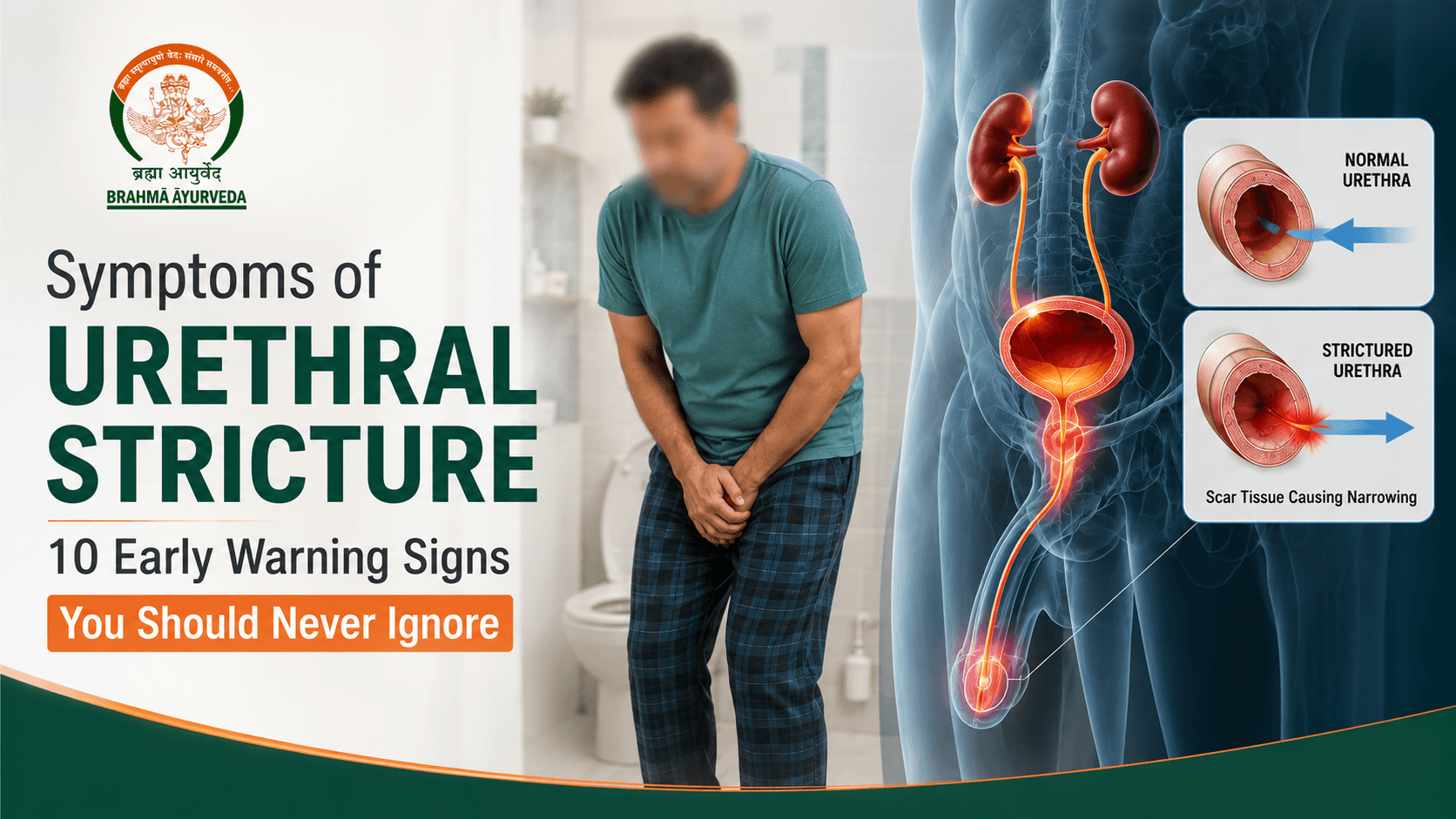
It is incredibly easy to ignore the first signs of a urethral stricture. Because the condition develops gradually, you might dismiss a slightly weaker urine stream or occasional hesitation as “just getting older” or a temporary annoyance.
However, these subtle changes are often the early warning signs of a narrowing in your urethra caused by scar tissue.
Without timely diagnosis and treatment, this narrowing can worsen. What starts as a minor inconvenience can eventually lead to painful complications, including recurrent urinary tract infections (UTIs), bladder damage, urinary retention, and even kidney issues. Recognizing these symptoms early allows you to get evaluated before things progress.
New to this condition? Start by reading our comprehensive guide: What is Urethral Stricture?
Why Do Symptoms of Urethral Stricture Occur?
To understand the symptoms, it helps to look at the anatomy. Normally, urine flows freely from the bladder, through the urethra, and out of the body without any resistance.
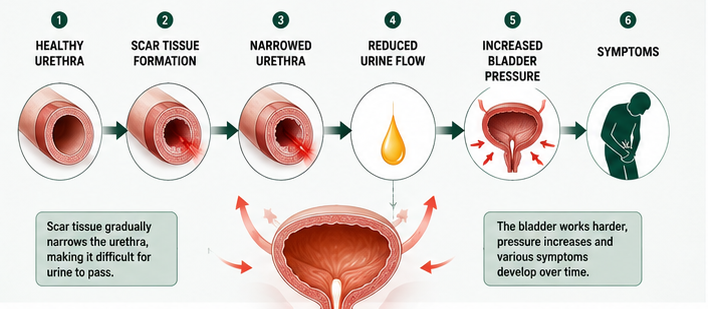
When a urethral stricture develops, scar tissue forms inside or around the urethra, narrowing this vital pathway. As the passage shrinks, urine struggles to get through. This narrowing triggers a chain reaction:
- Urine flow slows down significantly.
- The bladder has to work twice as hard to push urine past the blockage.
- Pressure builds up inside the urinary tract.
- Urine gets left behind in the bladder after you go.
- The risk of infection spikes because stagnant urine is a breeding ground for bacteria.
The Sneaky Progression: Can Symptoms Develop Slowly?
Yes, absolutely. Unlike a sudden bladder infection, a urethral stricture typically develops over weeks, months, or even years.
Because the decline in urine flow is so gradual, your body adapts to it. Many people don’t realize anything is wrong until the blockage becomes severe. This slow-burning progression is exactly why knowing the early signs of urethral stricture is so important.
10 Early Symptoms of Urethral Stricture
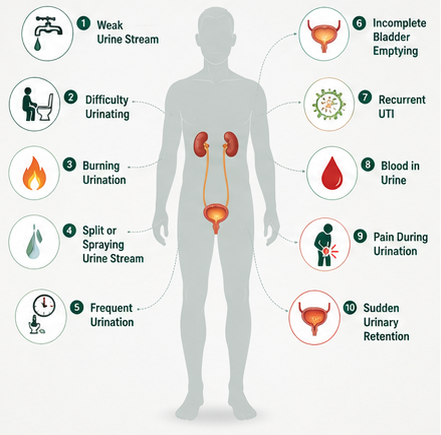
1. Weak Urine Flow
A weak urine flow is almost always the very first sign. Instead of a strong, steady stream, your urine may trickle out slowly or with much less force than it used to. Patients often report that it takes much longer to empty their bladder or that the stream has noticeably thinned out over time.
2. Difficulty Urinating
As the scar tissue tightens, you will experience increasing difficulty urinating. You might find yourself waiting at the toilet for the stream to start (urinary hesitancy) or feeling like there is a physical roadblock preventing the urine from escaping.
3. Burning Urination
Experiencing a sharp or warm sensation while peeing is common. This burning urination happens for two reasons: urine is being forced through a highly irritated, narrowed passage, or an underlying infection has settled in.
4. Split Urine Stream
If the narrowing is near the tip of the urethra, it can alter the shape of the exit point. This causes a split urine stream or spraying, making it difficult to aim and causing a mess.
5. Straining to Pee
Urinating should be a relaxed, effortless process. If you find yourself actively tensing your pelvic and abdominal muscles to force the urine out, you are straining—a classic sign of physical obstruction.
6. Feeling That the Bladder Is Not Empty
Do you finish peeing only to feel like you still have to go? This frustrating sensation of incomplete bladder emptying occurs because the narrowed urethra prevents the bladder from evacuating completely.
7. Frequent Urination
Because your bladder cannot empty fully in one go, it fills back up much faster. This leads to a constant, nagging urge to use the bathroom during the day and waking up multiple times throughout the night (nocturia).
8. Recurrent UTIs
A healthy urinary tract relies on the “flushing” effect of urination to keep bacteria out. When urine pools in the bladder due to a blockage, bacteria thrive. If you are dealing with a recurrent UTI, a stricture might be the root cause.
9. Blood in the Urine (Hematuria)
You might notice a pinkish tint in your toilet bowl or tiny drops of blood at the tip of the penis. The force of pushing urine past raw, scarred tissue can cause micro-tears that bleed. Note: Any instance of blood in the urine requires immediate medical evaluation.
10. Acute Urinary Retention
This is the most severe symptom and a true medical emergency. Urinary retention occurs when the urethra closes up so much that you cannot pass any urine at all, despite having an intensely full bladder. It is accompanied by severe abdominal pain and swelling.
Symptoms by Severity: A Quick Guide
The symptoms you experience depend heavily on how narrow your urethra has become.
| Stricture Severity | Common Symptoms | What is Happening |
|---|---|---|
| Mild | Slight drop in stream pressure, minor hesitation, occasional mild burning. | The urethra is slightly narrowed, but the bladder can still push past it easily. |
| Moderate | Noticeably weak urine flow, straining, frequent trips to the bathroom, feeling of fullness post-urination. | The bladder is working overtime; urine is starting to pool. |
| Severe | Trickling stream, urinary retention, intense pain, recurrent infections, bladder or kidney strain. | The pathway is nearly blocked, risking permanent damage to the kidneys and bladder. |
Red Flags: When to Seek Immediate Emergency Care
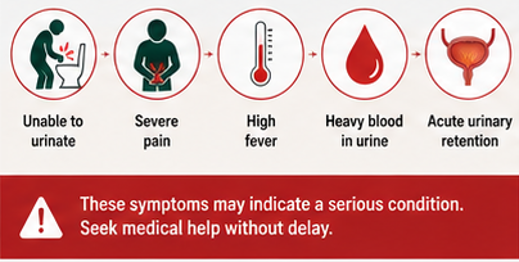
Please do not wait for a routine appointment if you experience any of the following:
- A complete inability to pass urine.
- Agonizing lower stomach pain.
- High fever, chills, and lower back pain (signs of a spreading kidney infection).
- Passing large blood clots in your urine.
Urethral Stricture vs. Enlarged Prostate (BPH)
Because both conditions block the flow of urine, they are frequently confused. However, they are entirely different issues:
- Urethral Stricture: Caused by scar tissue inside the tube itself. It can affect adults of any age and is usually linked to past injuries, medical procedures (like catheters), or infections.
- Enlarged Prostate (BPH): Caused by the growth of the prostate gland which squeezes the urethra from the outside. This is highly common in men over 50 and is a natural part of aging.
To tell them apart, a urologist will run simple, diagnostic tests like a Uroflowmetry or an RGU.
Experiencing symptoms of urethral stricture?
If you have persistent weak urine flow, difficulty urinating, recurrent UTIs, or other urinary symptoms, consult our specialists for a detailed evaluation and personalized treatment guidance.
FAQs
1. What is usually the first symptom of urethral stricture?
The earliest symptom is often a gradual reduction in urine flow. Many patients notice that their urine stream becomes weaker or thinner before other symptoms develop.
2. Can the symptoms of a urethral stricture come and go?
Yes, early on they can. You might have days where your stream feels relatively normal, followed by days of straining. However, because scar tissue does not go away on its own, the symptoms will eventually become permanent and worse.
3. Can urethral stricture cause recurrent UTIs?
Yes. Incomplete bladder emptying caused by urethral narrowing may increase the risk of recurrent urinary tract infections.
4. Why does a stricture cause burning when I pee?
It is a mix of friction and chemistry. Forcing liquid through a tight, inflamed passage causes physical irritation. Additionally, if stagnant urine has caused a mild infection, the urine itself becomes highly acidic and burns on contact.
5. Take Back Control of Your Urinary Health
Urinary issues do not just affect your physical health—they take a toll on your confidence, sleep, and daily peace of mind. If you are experiencing a weak urine flow, persistent straining, or suspect you have signs of a urethral stricture, don’t wait for things to worsen.
Book an appointment: +91 94094 96881