
What Causes Urethral Stricture? 10 Common Causes You Should Know
Learn the 10 primary causes of urethral stricture, including injuries, catheters, infections, and past surgeries. Discover symptoms, risk factors, and care options.

Brahma Ayurved
Ayurvedic Urology Center
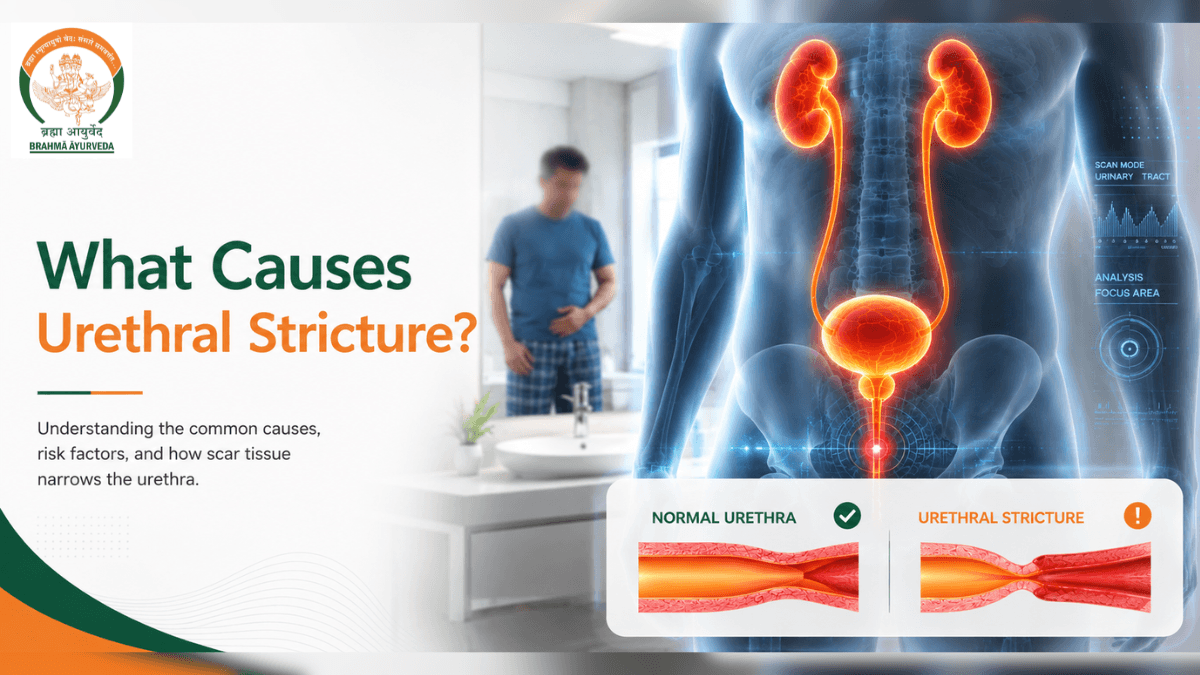
When someone hears they have a urethral stricture, the first question off their tongue is almost always: “How did I end up with this?”
Finding out what triggered your urethral stricture isn’t just about curiosity. It’s actually a huge piece of the puzzle when it comes to picking a treatment that works and making sure the issue doesn’t keep coming back.
To put it simply, a stricture happens when scar tissue forms along the inside of your urethra, squeezing the passage down. As that opening gets smaller, urine can’t flow out the way it’s supposed to. That’s when you start noticing a weak stream, trouble getting started, burning, constant trips to the bathroom, endless UTIs, or in worst-case scenarios, a complete inability to pee at all.
This scar tissue doesn’t usually show up out of nowhere—it often builds up over months or even years. Sometimes the culprit is obvious, like an old injury or a past surgery. Other times, there’s no clear smoking gun.
New to this condition? Start by reading our comprehensive guide: What is Urethral Stricture?
Knowing what caused the narrowing helps specialists figure out:
- Why the scar formed in the first place
- Which treatment gives you the best shot at long-term relief
- How likely the blockage is to return
- What you can do to protect your body moving forward
Let’s dive into the 10 most common causes of urethral stricture, who is most vulnerable, and how to address it.
What Actually Happens Inside?
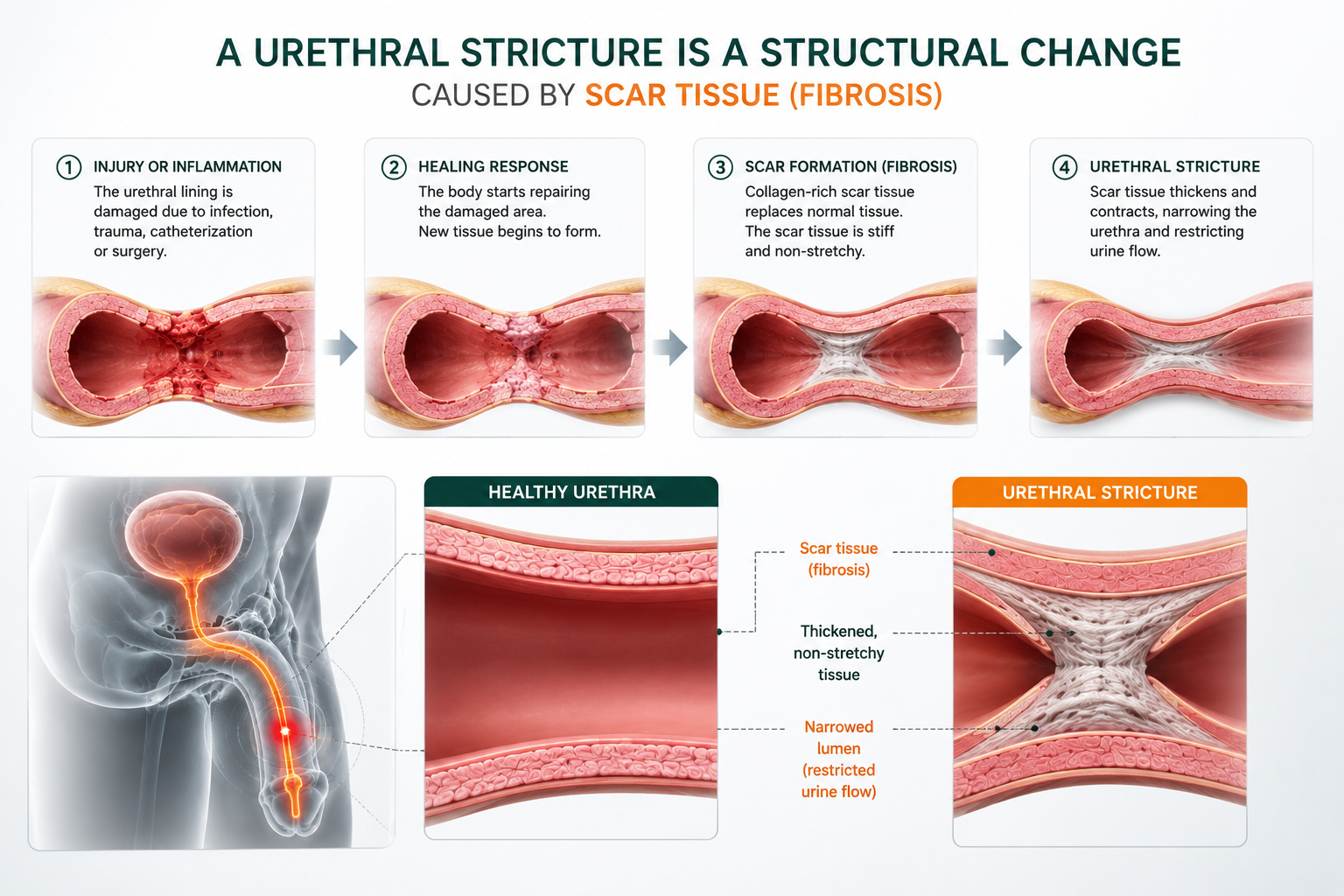
A urethral stricture isn’t just temporary swelling or a standard infection—it’s a physical structural change caused by scar tissue (fibrosis).
Whenever the delicate lining of your urethra gets damaged or severely inflamed, your body tries to repair itself. But just like a deep cut on your skin can leave behind a raised scar, healing inside the urinary tract can leave stiff, non-stretchy tissue that chokes off urine flow.
How severe things get depends on where the scar is, how long it spans, and how dense the tissue is.
10 Primary Causes of Urethral Stricture
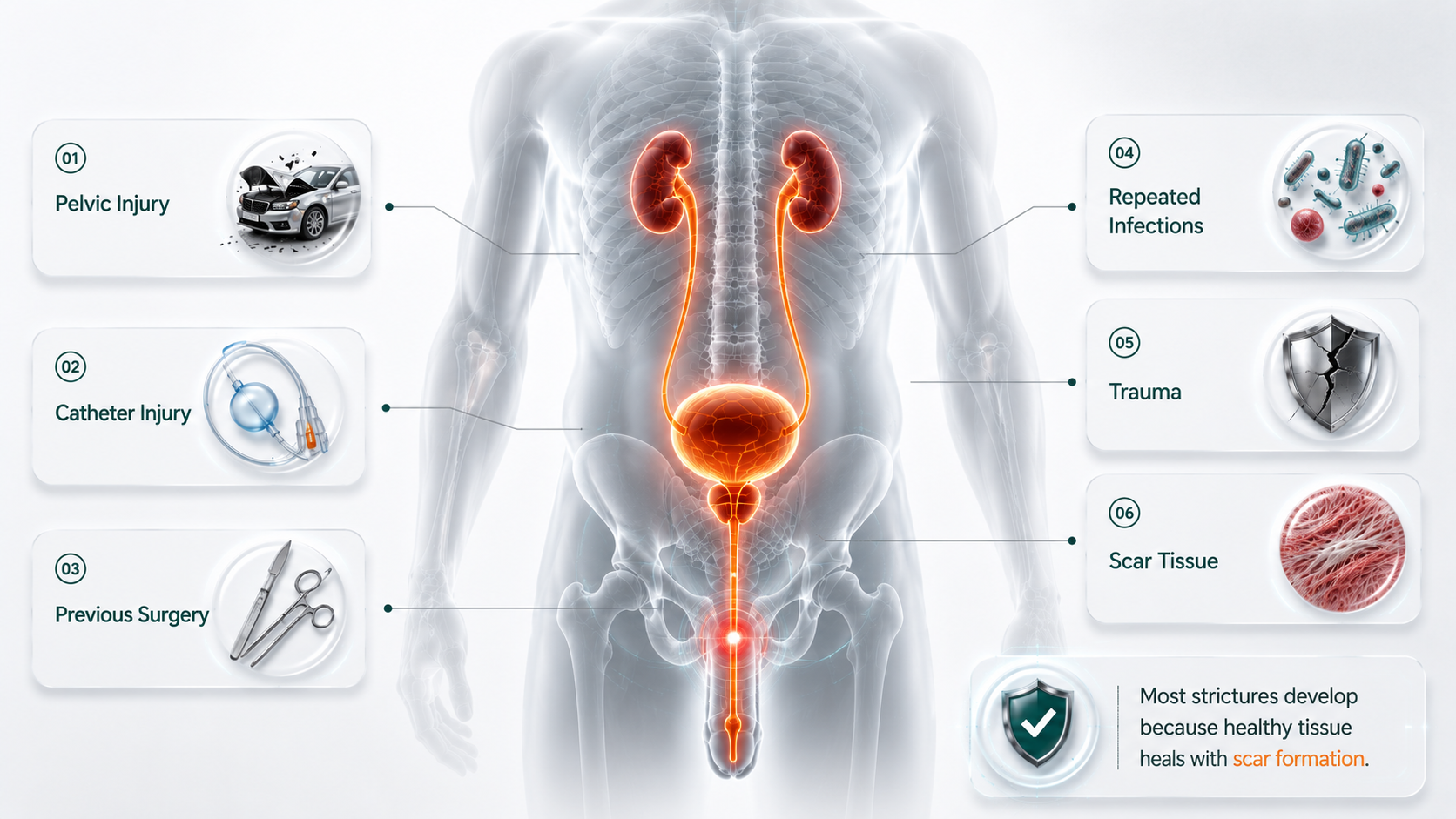
1. Blunt Physical Trauma or Injury
Physical injuries are a top trigger. Any hard impact to your pelvis, groin, or private area can bruise or crush the urethra. As the damaged tissue tries to mend itself, scar tissue takes over and narrows the tube.
Common traumatic causes include:
- Car, motorcycle, or bicycle accidents (especially straddle injuries)
- Hard falls onto narrow objects like fences, beams, or ladders
- Sports impacts and workplace accidents
- Fractures to the pelvic bone
A quick heads-up: Symptoms don’t always pop up right away. Because scar tissue tightens slowly, you might not notice a drop in urine flow until months after the incident.
If you are experiencing symptoms of urethral stricture or have been diagnosed with the condition, consult an experienced specialist for a thorough evaluation and personalized treatment plan.
2. Medical Catheter Use
A urinary catheter is a thin, flexible tube slid through the urethra into the bladder to drain urine. While it’s a standard medical tool, inserting one—especially if it’s forced, left in too long, or used repeatedly—can scrape or stretch the fragile lining of the urethra. Over time, that minor damage turns into internal scarring.
3. Past Surgeries in the Region
Operations involving the urinary tract or surrounding organs can leave behind scar tissue during the recovery process.
Common surgical culprits include:
- Hypospadias repairs (correcting a birth defect at the tip)
- Prostate procedures (such as TURP)
- Bladder neck surgeries
- Previous urethral repairs
If you’ve had multiple procedures in the same area, your chances of developing dense scar tissue go up.
4. Repeated Dilations or Cutting (OIU Procedures)
To temporarily open a tight urethra, doctors sometimes perform a dilation (stretching the tube) or an Optical Internal Urethrotomy (OIU, where the scar is sliced open). These procedures often offer quick short-term relief, but they can be a double-edged sword. Every single time scar tissue gets cut or stretched, the body responds by trying to heal itself again. For many people, that healing process just creates more scar tissue, starting a frustrating cycle of recurring blockages.
5. Recurrent Urinary Tract Infections (UTIs)
While most UTIs stay in the bladder, severe or repeated infections that travel into the urethra can trigger heavy inflammation. When that lining stays inflamed for weeks or months on end, it damages the surface tissue and leads to permanent scarring.
6. Sexually Transmitted Infections (STIs)
Back before antibiotics were widely available, STIs were the single biggest cause of urethral strictures. While it’s less common today, untreated or severe infections—like Gonorrhea or Chlamydia—can still cause intense urethritis (urethral inflammation) that leaves lasting scars behind.
7. Idiopathic Causes (No Clear Reason)
Believe it or not, a huge chunk of patients get checked out only for doctors to find zero history of trauma, surgery, catheter use, or STIs. When a stricture shows up with no obvious trigger, it’s called idiopathic. Experts suspect that tiny, unnoticed shifts in blood flow or age-related tissue changes might be behind these mystery cases.
8. Ongoing Chronic Inflammation
You don’t always need a major infection to develop scar tissue. Chronic, low-grade irritation from skin conditions, chemical sensitivity, or non-infectious urethritis can slowly wear down the lining. Over time, your body’s attempt to repair that continuous irritation results in fibrosis.
9. Inflammatory Skin Disorders (Like BXO/Lichen Sclerosus)
Certain skin conditions specifically target the genital area. Lichen Sclerosus (often called Balanitis Xerotica Obliterans or BXO) causes pale, hardened patches of skin that can creep into the tip of the urethra, gradually closing off the exit.
10. Foreign Objects or Kidney Stones
Passing a rough, jagged kidney stone down a narrow tube can scratch and tear the urethral walls. The same goes for any medical instrumentation or foreign objects. As those internal scratches heal, scar tissue takes their place.
Causes & Triggers at a Glance
| Category | Examples | How It Causes Scarring |
|---|---|---|
| Trauma & Injury | Bike accidents, pelvic fractures, hard falls | Physical tears that heal with thick internal scar tissue. |
| Medical Procedures | Catheters, prostate surgery, repeated dilations | Micro-tears or surgical cuts that trigger a heavy healing response. |
| Infections | STIs (Gonorrhea/Chlamydia), severe UTIs | Heavy, prolonged inflammation that destroys healthy lining. |
| Unknown (Idiopathic) | No prior injury or procedure | Subtle tissue changes or unnoticed micro-inflammation over time. |
Can You Prevent a Stricture?

You can’t control every risk factor, but a few practical steps can protect your urinary system:
- Don’t ignore infections: Treat STIs and UTIs right away before deep inflammation sets in.
- Prioritize gentle care: If you ever need a catheter, make sure it’s placed by a trained professional using plenty of lubrication.
- Protect your pelvis: Wear proper safety gear during contact sports or when riding motorcycles and bicycles.
- Avoid endless dilations: If a stricture keeps returning after being stretched, talk to a doctor about long-term solutions instead of repeating the same procedure.
Exploring Holistic & Ayurvedic Care
Treatment for a urethral stricture depends entirely on where the scar is, how long it stretches, and how dense it has become.
At Brahma Ayurveda, our specialists look closely at your complete medical history—including past surgeries or dilations—before shaping a personalized plan. Depending on the case, management may blend specific herbal formulations with targeted therapies like UttarBasti. This specialized procedure involves administering soothing, medicated oils directly into the passage to help ease localized inflammation and support tissue flexibility.
Want to understand how this works? Read our full guide on UttarBasti Treatment
Frequently Asked Questions
What is the most common cause of a urethral stricture?
Trauma (like straddle injuries or pelvic fractures) and medical procedures (such as catheters or endoscopic surgeries) make up the majority of cases.
Can a catheter cause a stricture long after it was removed?
Yes. The damage happens during insertion or removal, but scar tissue thickens gradually. You might not notice a drop in urine flow until months later.
Does every urethral injury turn into a stricture?
No. Plenty of minor scratches heal completely on their own. Whether a stricture forms depends on how deep the wound was and how your body heals.
Can women develop a urethral stricture?
Yes, though it’s much rarer. Because a woman’s urethra is much shorter, injuries and strictures are far less frequent, but they can still happen from trauma or surgery.
Can urinary tract infections cause urethral stricture?
Severe or recurrent infections involving the urethra may contribute to inflammation and scarring in some individuals.
What is an idiopathic urethral stricture?
It refers to a urethral stricture that develops without any clearly identifiable cause.
Can urethral stricture come back after treatment?
Recurrence depends on several factors, including the type, length, severity, and nature of the stricture, as well as the treatment method used.
Which tests help diagnose the cause of urethral stricture?
Doctors may recommend investigations such as uroflowmetry, post-void residual urine (PVR), Retrograde Urethrogram (RGU), Micturating Cystourethrogram (MCU), cystoscopy, or other tests depending on the patient’s condition.
Is every weak urine stream caused by urethral stricture?
No. Conditions such as enlarged prostate, urinary tract infection, overactive bladder, bladder dysfunction, or neurological disorders can also cause similar symptoms.
When to See a Specialist
If you are noticing persistent changes in your urination—such as a stream that feels unusually thin, trouble starting, or needing to strain—don’t wait for a total blockage to happen. Catching a stricture early preserves bladder function and saves you from emergency complications.